Congenital Diaphragmatic Hernia
A gap in the diaphragm lets abdominal organs into the chest.
What is Congenital Diaphragmatic Hernia?
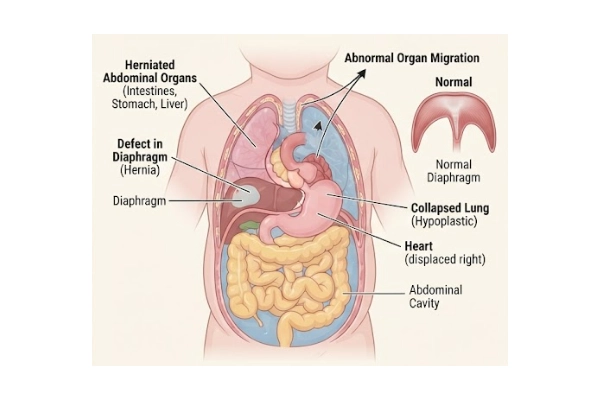
The diaphragm is the muscular sheet separating the chest from the abdomen. In congenital diaphragmatic hernia there is a gap in it, so abdominal organs — bowel, stomach, sometimes the liver or spleen — move up into the chest before birth.
The hole itself is not what makes the baby ill. The problem is that the organs in the chest prevent the lung on that side from developing properly, and the blood vessels in the lungs remain abnormally tight. The result is severe breathing difficulty from the first minutes of life.
It most often affects the left side. It is usually detected on an antenatal scan.
This is why repair is not done immediately. The baby is stabilised first, sometimes over days, and the operation is performed once breathing and circulation are stable. Rushing to surgery in an unstable baby does harm.
CDH requires a high level of neonatal intensive care. Where a baby needs support beyond what is available on the day, that is stated plainly to the family and transfer is arranged as fast as possible.
In your language
Congenital Diaphragmatic Hernia
A gap in the diaphragm lets abdominal organs into the chest.
The diaphragm is the muscular sheet separating the chest from the abdomen. In congenital diaphragmatic hernia there is a gap in it, so abdominal organs — bowel, stomach, sometimes the liver or spleen — move up into the chest before birth.
பிறவி உதரவிதான குடலிறக்கம் (CDH)
CDH என்பது நுரையீரலுக்கும் வயிற்றுக்கும் இடையிலான உதரவிதானத்தில் பிறவியிலேயே ஒரு ஓட்டை இருப்பது. அதன் வழியாக குடல் மற்றும் இரைப்பை நெஞ்சுக்குள் ஏறிவிடும். இதனால் அந்தப் பக்க நுரையீரல் முழுமையாக வளராது — இதுவே உண்மையான பிரச்சினை, ஓட்டை அல்ல. பிறந்த உடனேயே கடுமையான மூச்சுத் திணறல் இருக்கும். முக்கியம்: அறுவை சிகிச்சை உடனடியாக செய்யப்படுவதில்லை. முதலில் குழந்தையின் சுவாசத்தையும் ரத்த ஓட்டத்தையும் நிலைப்படுத்த வேண்டும் — இதற்கு சில நாட்கள் ஆகலாம். இது NICU தீவிர சிகிச்சை தேவைப்படும் நிலை. கர்ப்ப கால ஸ்கேனில் தெரிந்தால், முழு NICU வசதி உள்ள இடத்தில் பிரசவத்தைத் திட்டமிடுங்கள்.
ജന്മനായുള്ള ഡയഫ്രം ഹെർണിയ (CDH)
നെഞ്ചിനും വയറിനും ഇടയിലുള്ള ഡയഫ്രത്തിൽ ജന്മനാ ഒരു ദ്വാരം ഉണ്ടാകുന്നതാണ് CDH. അതിലൂടെ കുടലും ആമാശയവും നെഞ്ചിലേക്ക് കയറും. ഇതുമൂലം ആ വശത്തെ ശ്വാസകോശം പൂർണമായി വളരില്ല — ഇതാണ് യഥാർത്ഥ പ്രശ്നം, ദ്വാരമല്ല. ജനിച്ചയുടൻ കടുത്ത ശ്വാസതടസ്സം ഉണ്ടാകും. പ്രധാനം: ശസ്ത്രക്രിയ ഉടനടി ചെയ്യാറില്ല. ആദ്യം കുഞ്ഞിന്റെ ശ്വാസവും രക്തയോട്ടവും സ്ഥിരപ്പെടുത്തണം — ഇതിന് ദിവസങ്ങൾ എടുക്കാം. ഇത് NICU തീവ്രപരിചരണം വേണ്ട അവസ്ഥയാണ്.
What Parents Notice
Not every child shows every sign. If something on this list matches your child, it is worth an examination rather than a guess.
- Severe breathing difficulty from birth — fast breathing, grunting, chest recession, blue discolouration
- A scaphoid, sunken-looking abdomen because the contents are in the chest
- A barrel-shaped chest with reduced breath sounds on the affected side
- Heart sounds displaced towards the opposite side
- Bowel sounds heard in the chest
- Detected on antenatal ultrasound in most cases
- A milder late-presenting form in older infants or children, with feeding difficulty, recurrent chest infections or vomiting
How It Is Confirmed
- Antenatal ultrasound, which also allows assessment of lung size and prognosis
- Chest X-ray after birth — the definitive test, showing bowel loops within the chest
- Blood gases to assess oxygenation and how the lungs are performing
- Echocardiogram to assess the heart and the pressure in the lung blood vessels
- Ultrasound of the abdomen and kidneys, and screening for associated abnormalities
How It Is Treated
- Immediately at birth: intubation and gentle ventilation. Bag-and-mask ventilation is avoided because it inflates the stomach and bowel inside the chest and makes breathing worse.
- A nasogastric tube on continuous drainage to keep the stomach empty.
- Stabilisation in neonatal intensive care: careful ventilation, circulatory support, and management of the high pressure in the lung blood vessels.
- Surgery once the baby is stable — usually after 24 to 72 hours or longer. The organs are returned to the abdomen and the diaphragm is repaired, directly or with a patch.
- Continued intensive care afterwards, with gradual weaning of ventilation and slow introduction of feeds.
- Long-term follow-up for lung function, reflux, growth, hearing and development, all of which are affected in a proportion of children.
Does My Child Need Surgery?
Not every child with Congenital Diaphragmatic Hernia needs an operation. These are the situations in which surgery is advised — and the decision is always made after examining your child, never from a description alone.
After stabilisation, not before — this is a key principle in modern CDH care
The timing is judged on ventilation requirement, oxygenation and pulmonary artery pressure
Late-presenting cases in older infants and children are repaired once diagnosed
Emergency surgery is occasionally needed if there is obstruction or strangulation of the bowel within the chest
What Happens Over Time
Depends on how underdeveloped the lungs are and on the pressure in the lung blood vessels — not on the size of the hole. Outcomes range widely. Survivors may have reduced lung function that improves with growth, and reflux, feeding difficulty and hearing or developmental problems are followed for years.
This describes what usually happens, not what will happen to your child. The surgeon will give you a specific picture after examining them.
Can It Be Prevented?
It cannot be prevented. Delivery in a centre with neonatal intensive care and paediatric surgery available is the single decision that most affects what follows.
From First Visit to Going Home
What happens, in order, so that nothing on the day comes as a surprise.
Consultation
Dr. Pratheep Samraj examines your child and goes through the history, earlier reports and any treatment already given.
Investigation
Only the tests that change the decision are asked for — commonly an ultrasound, blood tests, and occasionally an X-ray or a scopy.
Explanation
You are told what the condition is, whether it needs surgery, what happens if you wait, and what the operation involves.
Treatment
If surgery is appropriate it is planned with paediatric anaesthetic cover, with ICU and NICU support available in the hospital.
Follow-up
You go home with written instructions and a review date, and you can reach the hospital by phone or WhatsApp in between.
Hospital stay
Weeks in neonatal intensive care in most cases, driven by lung function rather than by the operation.
Recovery at home
Weaning off ventilation is gradual. Feeding is introduced slowly and reflux is common afterwards.
Follow-up
Long-term and multidisciplinary — lung function, growth, nutrition, reflux, hearing and neurodevelopment.
Please bring with you: all previous scan reports, blood test reports, discharge summaries, records of any earlier operation, current medicines, and your child’s immunisation card. Photographs on your phone of a swelling that comes and goes are genuinely useful.
Please note: this page is general information about Congenital Diaphragmatic Hernia, not advice about your child. Timing, suitability for surgery and the expected result differ from child to child and are decided only after clinical evaluation.
Questions Parents Ask
If your question is not here, send it on WhatsApp — you will get an answer from the hospital team.
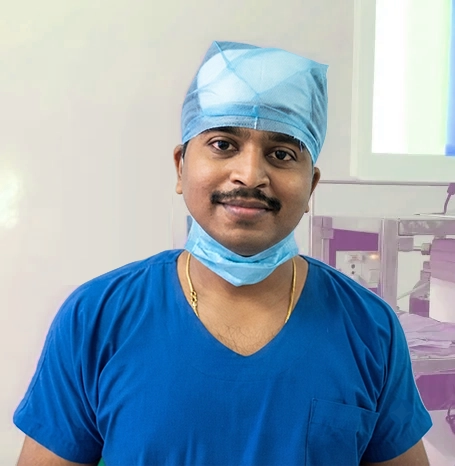
Dr. Pratheep Samraj
Consultant Paediatric & Neonatal Surgeon · Palliyadi, Kanyakumari
Super-specialist surgical care for newborns, infants and children, with expertise in paediatric urology, congenital anomalies, gastro-intestinal surgery and minimally invasive surgery.
Related Conditions
This is known before birth in most cases, and the plan belongs before birth too.
Where the baby is delivered matters as much as the operation that follows. If a scan has shown a diaphragmatic hernia, contact us now rather than at delivery.
Consultation 10:00 AM - 1:00 PM & 4:00 PM - 8:00 PM · 24-hour laboratory & pharmacy
In an emergency — green vomiting in a baby, a groin swelling that will not go back, severe tummy pain, or a newborn not passing urine or meconium — come straight to the hospital or to your nearest emergency department. Do not wait for a reply to a message.