Appendicitis
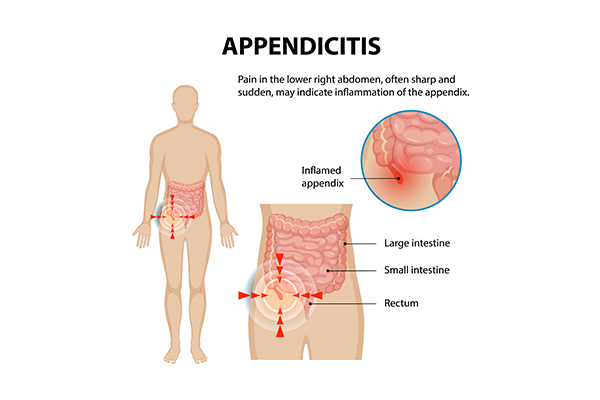
Tummy pain that moves to the lower right side.
What is Appendicitis?
The appendix is a small blind-ended tube attached to the start of the large bowel. Appendicitis means it has become blocked and inflamed. If it is not treated it can burst, spilling infection into the abdomen.
It is the commonest reason a child needs an emergency abdominal operation.
The classic pattern is pain that starts around the navel, then moves and settles in the lower right side of the tummy, with loss of appetite and vomiting. Fever comes later.
In young children under five the picture is far less typical and the appendix perforates sooner, which is why any child with persistent tummy pain and vomiting deserves examination rather than reassurance over the phone.
In your language
Appendicitis
Tummy pain that moves to the lower right side.
The appendix is a small blind-ended tube attached to the start of the large bowel. Appendicitis means it has become blocked and inflamed. If it is not treated it can burst, spilling infection into the abdomen.
குடல்வால் அழற்சி (அப்பென்டிசைட்டிஸ்)
குடல்வால் அழற்சி குழந்தைகளுக்கு அவசர அறுவை சிகிச்சை தேவைப்படும் மிக பொதுவான காரணம். வலி முதலில் தொப்புளைச் சுற்றி தொடங்கி, பின்னர் வலது கீழ் வயிற்றுக்கு மாறும். பசியின்மை, வாந்தி, லேசான காய்ச்சல் இருக்கும். நடக்கும்போதோ இருமும்போதோ வலி அதிகரிக்கும். வலி திடீரென குறைந்து பின்பு மோசமாகி, வயிறு இறுகினால் குடல்வால் வெடித்திருக்கலாம் — உடனடியாக மருத்துவமனைக்கு செல்லுங்கள். வீட்டு வைத்தியம் அல்லது வலி நிவாரணி மட்டும் போதாது. துளை அறுவை சிகிச்சை (லேபராஸ்கோபி) மூலம் விரைவில் குணமடையலாம்.
അപ്പെൻഡിസൈറ്റിസ്
കുട്ടികളിൽ അടിയന്തര വയറു ശസ്ത്രക്രിയ വേണ്ടിവരുന്നതിന്റെ ഏറ്റവും സാധാരണ കാരണമാണ് അപ്പെൻഡിസൈറ്റിസ്. വേദന ആദ്യം പൊക്കിളിനു ചുറ്റും തുടങ്ങി പിന്നീട് വലതു താഴ്ഭാഗത്തേക്ക് മാറും. വിശപ്പില്ലായ്മ, ഛർദ്ദി, ചെറിയ പനി എന്നിവ ഉണ്ടാകും. നടക്കുമ്പോഴും ചുമയ്ക്കുമ്പോഴും വേദന കൂടും. വേദന പെട്ടെന്ന് കുറഞ്ഞ് പിന്നീട് കൂടുകയും വയറ് കട്ടിയാവുകയും ചെയ്താൽ അപ്പെൻഡിക്സ് പൊട്ടിയിരിക്കാം — ഉടൻ ആശുപത്രിയിൽ എത്തിക്കുക. കീഹോൾ ശസ്ത്രക്രിയയിലൂടെ വേഗം സുഖം പ്രാപിക്കാം.
What Parents Notice
Not every child shows every sign. If something on this list matches your child, it is worth an examination rather than a guess.
- Tummy pain that begins near the navel and shifts to the lower right side
- Loss of appetite — a genuinely useful sign in children
- Nausea and vomiting, usually starting after the pain
- Low-grade fever
- Pain that is worse with movement, coughing, walking or going over a bump in the road
- The child lies still, often with the right hip drawn up, and does not want to be touched
- Diarrhoea or urinary symptoms can occur and can mislead
- Warning: pain that suddenly eases and then returns worse, with a rigid tummy and high fever, suggests perforation — go to hospital immediately
How It Is Confirmed
- Careful clinical examination, repeated after an interval if the picture is unclear — this remains the most important part
- Blood tests including white cell count and CRP
- Urine test to exclude a urinary infection
- Ultrasound of the abdomen, which is the first-line scan in children
- CT scan only in selected cases where the diagnosis remains uncertain, because of the radiation involved
- A period of observation in hospital with repeat examination, which is a legitimate and often the safest approach
How It Is Treated
- The standard treatment is appendicectomy — removal of the appendix.
- Laparoscopic (keyhole) appendicectomy is performed through three small cuts, with less pain, a smaller scar and a faster return to school. The 4K laparoscopic system at the centre is used for these procedures.
- Open appendicectomy through a small right-sided incision remains a good option in certain situations, and the choice is explained before surgery.
- Intravenous fluids and antibiotics are started as soon as the diagnosis is made.
- If the appendix has already perforated, the abdomen is washed out, antibiotics continue for longer, and the hospital stay is longer.
- A contained appendix mass or abscess is sometimes treated first with antibiotics and drainage, with surgery planned later.
Does My Child Need Surgery?
Not every child with Appendicitis needs an operation. These are the situations in which surgery is advised — and the decision is always made after examining your child, never from a description alone.
Once appendicitis is diagnosed, surgery is the treatment — and delay is what causes perforation
Urgently, if there is generalised tenderness, high fever or signs of perforation
After initial antibiotic treatment in a child who presents late with a walled-off appendix mass
Antibiotics alone are not the standard approach for children in routine practice, and are used only in specific circumstances discussed with the family
What Happens Over Time
Excellent when treated before the appendix bursts — children are usually home within two or three days and back at school in about a week. A perforated appendix means a longer stay, a longer course of antibiotics and a small risk of a collection needing drainage, but the great majority still recover fully.
This describes what usually happens, not what will happen to your child. The surgeon will give you a specific picture after examining them.
Can It Be Prevented?
Appendicitis cannot be prevented. What can be avoided is a perforation, by bringing a child with persistent tummy pain and vomiting to be examined rather than waiting overnight.
From First Visit to Going Home
What happens, in order, so that nothing on the day comes as a surprise.
Consultation
Dr. Pratheep Samraj examines your child and goes through the history, earlier reports and any treatment already given.
Investigation
Only the tests that change the decision are asked for — commonly an ultrasound, blood tests, and occasionally an X-ray or a scopy.
Explanation
You are told what the condition is, whether it needs surgery, what happens if you wait, and what the operation involves.
Treatment
If surgery is appropriate it is planned with paediatric anaesthetic cover, with ICU and NICU support available in the hospital.
Follow-up
You go home with written instructions and a review date, and you can reach the hospital by phone or WhatsApp in between.
Hospital stay
Simple appendicitis: usually 2 to 3 days. Perforated appendicitis: often 5 to 7 days or more.
Recovery at home
After a laparoscopic operation children are usually up and eating the next day and back at school in about a week. Avoid sport and heavy play for 3 to 4 weeks.
Follow-up
One review at 2 weeks to check the wounds. Nothing long-term is usually needed after an uncomplicated appendicectomy.
Please bring with you: all previous scan reports, blood test reports, discharge summaries, records of any earlier operation, current medicines, and your child’s immunisation card. Photographs on your phone of a swelling that comes and goes are genuinely useful.
Please note: this page is general information about Appendicitis, not advice about your child. Timing, suitability for surgery and the expected result differ from child to child and are decided only after clinical evaluation.
Questions Parents Ask
If your question is not here, send it on WhatsApp — you will get an answer from the hospital team.

Dr. Pratheep Samraj
Consultant Paediatric & Neonatal Surgeon · Palliyadi, Kanyakumari
Super-specialist surgical care for newborns, infants and children, with expertise in paediatric urology, congenital anomalies, gastro-intestinal surgery and minimally invasive surgery.
Related Conditions
Suspected appendicitis is a today problem, not a next-week one.
Pain that has moved to the lower right and is getting worse should be seen the same day. A perforated appendix is a far bigger illness than an appendix removed in time.
Consultation 10:00 AM - 1:00 PM & 4:00 PM - 8:00 PM · 24-hour laboratory & pharmacy
In an emergency — green vomiting in a baby, a groin swelling that will not go back, severe tummy pain, or a newborn not passing urine or meconium — come straight to the hospital or to your nearest emergency department. Do not wait for a reply to a message.