Intestinal Obstruction
Green vomiting, a swollen tummy and no stool.
What is Intestinal Obstruction?
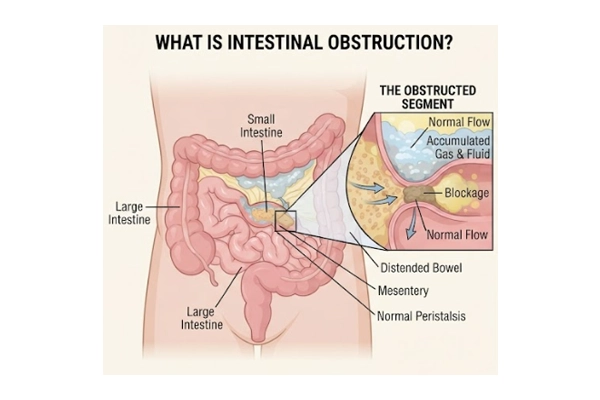
Intestinal obstruction means the passage of food and fluid through the bowel is blocked. Fluid and gas build up above the block, the abdomen distends, and the child vomits.
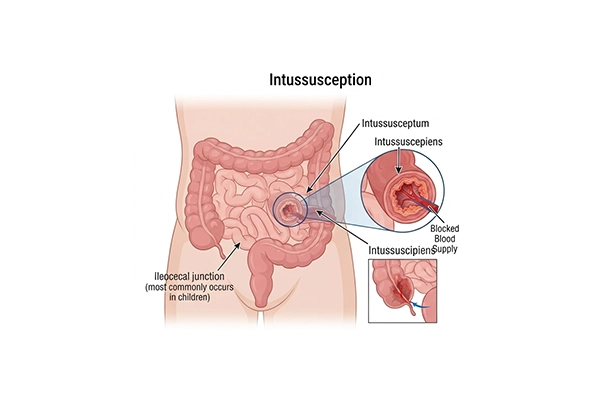
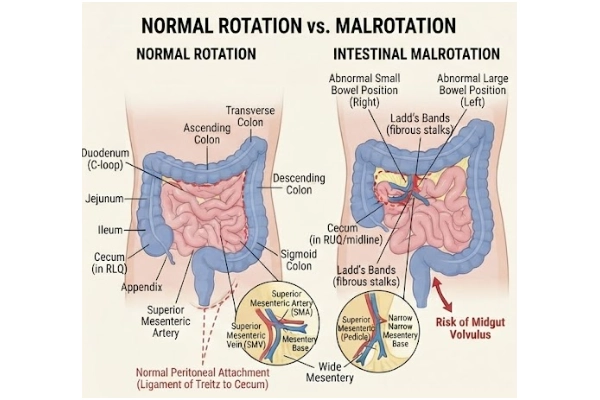
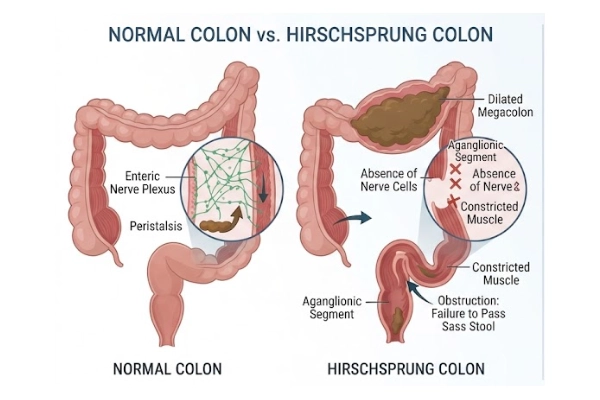
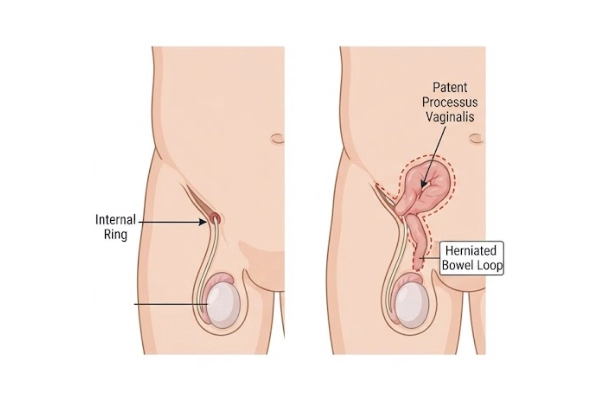
It is not a diagnosis in itself but a situation with many causes. In newborns these include intestinal atresia, malrotation with volvulus, meconium ileus, Hirschsprung disease and anorectal malformation. In older children the common causes are adhesions from previous surgery, an incarcerated hernia, intussusception and worm bolus.
The single most important sign for parents to know is green vomiting. Bile-stained vomit in a baby is an emergency until proved otherwise — it means the block is beyond the stomach outlet.
Untreated obstruction leads to dehydration, bowel that loses its blood supply, perforation and sepsis. Timing matters enormously.
In your language
Intestinal Obstruction
Green vomiting, a swollen tummy and no stool.
Intestinal obstruction means the passage of food and fluid through the bowel is blocked. Fluid and gas build up above the block, the abdomen distends, and the child vomits.
குடல் அடைப்பு
குடல் அடைப்பு ஏற்பட்டால் குழந்தைக்கு வாந்தி வரும், வயிறு உப்பும், மலம் அல்லது வாயு வெளியேறாது. மிக முக்கியமான எச்சரிக்கை அறிகுறி: பச்சை நிற வாந்தி. குழந்தை பச்சை நிறத்தில் வாந்தி எடுத்தால் அது அவசர நிலை — உடனடியாக மருத்துவமனைக்கு கொண்டு வாருங்கள். பிறந்த குழந்தை 24–48 மணி நேரத்திற்குள் கருமலம் கழிக்கவில்லை என்றாலும் உடனே காட்ட வேண்டும். சில நிலைகளில் குடல் திருகிக்கொள்வதால் மணிநேரங்களுக்குள் அறுவை சிகிச்சை தேவைப்படும். காலதாமதம் குடலை இழக்க நேரிடலாம்.
കുടൽ തടസ്സം
കുടൽ തടസ്സമുണ്ടായാൽ കുട്ടിക്ക് ഛർദ്ദി, വയറു വീർക്കൽ, മലമോ വായുവോ പോകാതിരിക്കൽ എന്നിവ ഉണ്ടാകും. ഏറ്റവും പ്രധാന മുന്നറിയിപ്പ്: പച്ച നിറത്തിലുള്ള ഛർദ്ദി. കുഞ്ഞ് പച്ച ഛർദ്ദിച്ചാൽ അത് അടിയന്തരാവസ്ഥയാണ് — ഉടൻ ആശുപത്രിയിൽ എത്തിക്കുക. നവജാത ശിശു 24–48 മണിക്കൂറിനുള്ളിൽ കറുത്ത മലം പോയില്ലെങ്കിലും ഉടൻ കാണിക്കണം. ചില അവസ്ഥകളിൽ കുടൽ പിരിയുന്നതിനാൽ മണിക്കൂറുകൾക്കുള്ളിൽ ശസ്ത്രക്രിയ വേണ്ടിവരും.
What Parents Notice
Not every child shows every sign. If something on this list matches your child, it is worth an examination rather than a guess.
- Vomiting — green or yellow-green (bile-stained) is the danger sign
- A swollen, distended tummy
- Not passing stool or wind
- Crampy tummy pain, or episodic inconsolable crying in a baby
- Refusing feeds, lethargy, dehydration
- A newborn who has not passed meconium within 24 to 48 hours of birth
- A tense, tender abdomen, fever or a very unwell child — suggesting the bowel is already compromised
How It Is Confirmed
- X-ray of the abdomen, showing dilated bowel loops and fluid levels
- Ultrasound, particularly useful for intussusception, malrotation and hernias
- Contrast studies — an upper GI contrast study for suspected malrotation, or a contrast enema for large bowel causes
- Blood tests for hydration, electrolytes, infection markers and acid-base status
- Examination of the groins and the anus in every case, because a stuck hernia and an anorectal malformation are both found simply by looking
How It Is Treated
- Immediate stabilisation: nothing by mouth, a nasogastric tube to decompress the stomach, intravenous fluids and correction of electrolytes.
- Antibiotics where infection or compromised bowel is suspected.
- Emergency surgery where the bowel is twisted, strangulated or perforated — volvulus in particular cannot wait.
- Non-operative treatment in selected cases, such as adhesive obstruction that settles with decompression, or intussusception reduced with air.
- The definitive operation depends on the cause: untwisting and Ladd procedure for malrotation, resection and anastomosis for atresia, hernia repair, or division of adhesions.
- Postoperative care in ICU or NICU where the child needs ventilation or close monitoring.
Does My Child Need Surgery?
Not every child with Intestinal Obstruction needs an operation. These are the situations in which surgery is advised — and the decision is always made after examining your child, never from a description alone.
Bile-stained vomiting in a newborn with suspected malrotation and volvulus — this is one of the true surgical emergencies of childhood and is operated within hours
Signs of strangulation: a tense tender abdomen, fever, tachycardia, blood in the stool
An incarcerated hernia that cannot be reduced
Complete obstruction that does not settle with conservative management
Perforation on X-ray
What Happens Over Time
Depends entirely on the cause and on how quickly it is treated. Obstruction relieved before the bowel is damaged generally does very well. Where a length of bowel had to be removed, feeding and growth need longer attention.
This describes what usually happens, not what will happen to your child. The surgeon will give you a specific picture after examining them.
Can It Be Prevented?
Most causes cannot be prevented. Repairing a hernia before it becomes stuck removes one common cause, and prompt attention to bile-stained vomiting prevents much of the harm from the rest.
From First Visit to Going Home
What happens, in order, so that nothing on the day comes as a surprise.
Consultation
Dr. Pratheep Samraj examines your child and goes through the history, earlier reports and any treatment already given.
Investigation
Only the tests that change the decision are asked for — commonly an ultrasound, blood tests, and occasionally an X-ray or a scopy.
Explanation
You are told what the condition is, whether it needs surgery, what happens if you wait, and what the operation involves.
Treatment
If surgery is appropriate it is planned with paediatric anaesthetic cover, with ICU and NICU support available in the hospital.
Follow-up
You go home with written instructions and a review date, and you can reach the hospital by phone or WhatsApp in between.
Hospital stay
Varies with the cause — from a few days for obstruction that settles conservatively to two weeks or more after major bowel surgery in a newborn.
Recovery at home
Feeds are reintroduced gradually once bowel function returns. Some babies need intravenous nutrition in the interval.
Follow-up
Depends on the cause and on how much bowel was involved. Growth, nutrition and bowel function are all followed.
Please bring with you: all previous scan reports, blood test reports, discharge summaries, records of any earlier operation, current medicines, and your child’s immunisation card. Photographs on your phone of a swelling that comes and goes are genuinely useful.
Please note: this page is general information about Intestinal Obstruction, not advice about your child. Timing, suitability for surgery and the expected result differ from child to child and are decided only after clinical evaluation.
Questions Parents Ask
If your question is not here, send it on WhatsApp — you will get an answer from the hospital team.

Dr. Pratheep Samraj
Consultant Paediatric & Neonatal Surgeon · Palliyadi, Kanyakumari
Super-specialist surgical care for newborns, infants and children, with expertise in paediatric urology, congenital anomalies, gastro-intestinal surgery and minimally invasive surgery.
Related Conditions
Green vomiting in a child is never normal.
Bile-stained vomiting with a swollen tummy and no stool needs to be seen immediately, not managed at home overnight. Come straight to the hospital and do not feed.
Consultation 10:00 AM - 1:00 PM & 4:00 PM - 8:00 PM · 24-hour laboratory & pharmacy
In an emergency — green vomiting in a baby, a groin swelling that will not go back, severe tummy pain, or a newborn not passing urine or meconium — come straight to the hospital or to your nearest emergency department. Do not wait for a reply to a message.